IVF and ICSI in Manchester

IVF (in vitro fertilisation) is the treatment in which eggs are collected from the ovaries, fertilised with sperm in a laboratory and the resulting embryo is placed in the womb. ICSI is a version of IVF in which a single sperm is injected directly into each egg. At Aurora Healthcare we provide consultant-led IVF and ICSI in Manchester, with every cycle planned and overseen by a consultant gynaecologist and the licensed laboratory stages carried out through our HFEA-licensed partner, Manchester Fertility.
This page explains who IVF is for, what a cycle involves from first appointment to pregnancy test, what our results look like, and when ICSI is recommended instead of standard IVF.
Aurora treatment outcomes per embryo transfer, updated January 2025. See full results.
What is IVF?
IVF is a way of achieving fertilisation outside the body when it is not happening reliably inside it. Your ovaries are stimulated with hormone injections to mature several eggs at once rather than the usual one. The eggs are collected in a short procedure, mixed with prepared sperm in the laboratory, and the embryos that develop are monitored for a few days before the best one is transferred into the womb. Any other good-quality embryos can be frozen for later.
IVF has been used in the UK since 1978 and is regulated by the Human Fertilisation and Embryology Authority (HFEA), which licenses every clinic and laboratory that handles eggs, sperm and embryos, and publishes each clinic’s results.

Who is IVF for?
IVF is recommended when simpler treatments are unlikely to work or have already been tried. Common reasons include:
- Blocked, damaged or absent fallopian tubes, the problem IVF was originally developed to solve.
- Endometriosis that is affecting fertility, particularly at moderate or severe stages.
- Ovulation problems such as PCOS where ovulation induction has not led to a pregnancy.
- Unexplained infertility after two years of trying, or sooner where age is a factor.
- A significant sperm problem, where ICSI is usually added (see below).
- Treatment with donated eggs or sperm, or when embryos are being created for a surrogate.
- Fertility preservation, where eggs or embryos are frozen before medical treatment or for personal reasons.
We treat women using their own eggs up to the age of 45 and using donated eggs up to the age of 51. If you are unsure whether IVF is the right next step, a consultation with fertility screening for both partners will usually answer that question, and for some couples the answer is a gentler option such as ovulation induction or IUI.
What happens during IVF treatment?
A full cycle takes roughly six to eight weeks from the start of medication to the pregnancy test. These are the stages.
Consultation and screening
Your consultant reviews your history and any previous results, arranges hormone and ovarian reserve blood tests, a pelvic scan, virology screening for both partners and a semen analysis, then agrees a personalised protocol with you.
Ovarian stimulation
Daily hormone injections encourage several follicles to grow. A second medication prevents ovulation happening early.
Monitoring
Ultrasound scans and blood tests track how the follicles are responding so the dose can be adjusted and the risk of over-response kept low.
Trigger and egg collection
A final injection matures the eggs. About 36 hours later the eggs are collected through the vagina under sedation, guided by ultrasound. You go home the same day.
Fertilisation and embryo culture
Eggs are fertilised by IVF or ICSI in the partner laboratory and the embryos are cultured and assessed, usually to day five (blastocyst stage).
Embryo transfer
A single embryo is placed in the womb using a fine catheter. No anaesthetic is needed. Spare good-quality embryos are frozen.
Pregnancy test
Progesterone support continues after transfer and a blood or urine test confirms the result. If positive, an early scan follows at around seven weeks.
If you have frozen embryos from a previous cycle, they can be transferred in a later natural or hormone-prepared cycle without repeating stimulation or egg collection. Counselling is available at every stage through our fertility counselling service, and many patients find one session before treatment starts is time well spent.
IVF success rates in Manchester: our results
Because Aurora is a specialised consultant-led unit that treats a high proportion of women with conditions such as endometriosis and fibroids, the HFEA advises us to report our outcomes combined over several years. Our most recent published figures show a positive pregnancy test in 59% of fresh IVF and ICSI transfers, 53% of frozen embryo transfers and 60% of donor egg transfers, with no cases of severe ovarian hyperstimulation syndrome in the period. The full breakdown, including how these figures are measured, is on our published success rates page.
Your own chance of success depends most on your age, the cause of your fertility difficulty and how many good-quality embryos a cycle produces. Nationally, the HFEA reports that around a third of embryo transfers in women under 35 lead to a live birth, falling gradually through the late thirties. You can compare any UK clinic’s verified results on the HFEA website.
How much does IVF cost in Manchester?
A self-funded IVF cycle at Aurora is priced as a package covering consultant care, monitoring, egg collection, laboratory work and embryo transfer, with medication and any add-ons such as ICSI or embryo freezing itemised separately so there are no surprises. We also offer prepaid plans through our treatment funding options. For a detailed breakdown of what is and is not included in a typical cycle, and how private costs compare with NHS provision in Greater Manchester, read our guide to how much IVF costs in Manchester.
ICSI Manchester: when a single sperm is injected into the egg
What is ICSI?
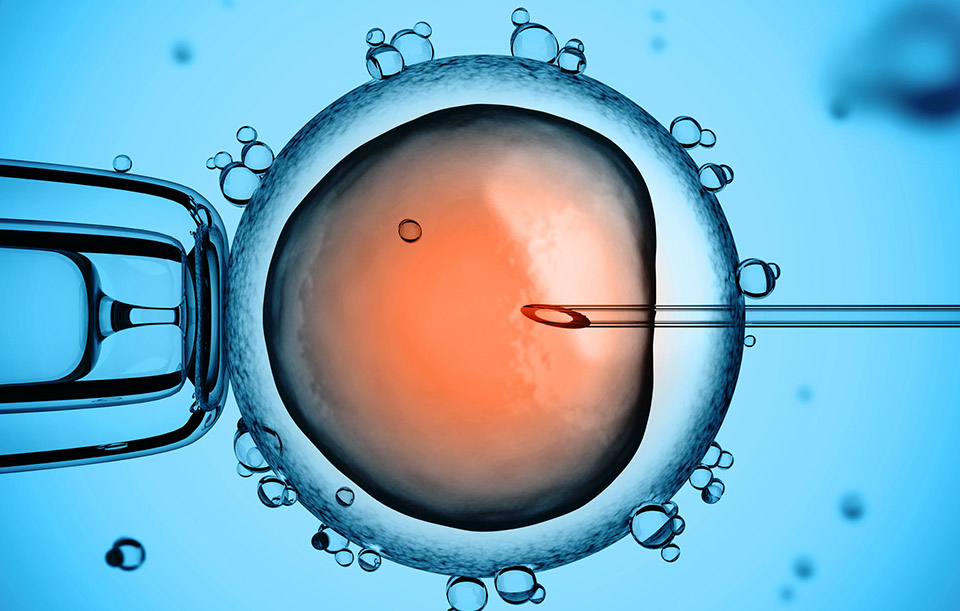
Intracytoplasmic sperm injection (ICSI) follows exactly the same cycle as IVF, from stimulation through to embryo transfer. The difference happens in the laboratory. Instead of placing thousands of sperm with each egg and letting fertilisation occur naturally, the embryologist selects a single healthy-looking sperm and injects it directly into the centre of the egg using a very fine glass needle. Only mature eggs can be injected, and the eggs are checked for fertilisation the following morning as they would be after IVF.
Who needs ICSI?
ICSI is designed to overcome problems with the sperm reaching or penetrating the egg. We recommend it when:
- Sperm count, movement (motility) or shape (morphology) is significantly below normal on semen analysis.
- Sperm have been retrieved surgically from the testicle or epididymis, for example after a vasectomy or where there is a blockage.
- Frozen sperm is being used and the thawed sample is limited.
- A previous IVF cycle produced very low or no fertilisation despite a good number of eggs.
- Sperm antibodies or other factors make natural fertilisation in the dish unlikely.
Where sperm results are normal, ICSI does not improve your chances. The HFEA is clear that there is no evidence to support ICSI for fertility problems unrelated to the male partner’s sperm, so we do not add it routinely. If a male factor is suspected, our andrology service can investigate and, where appropriate, treat the cause before or alongside ICSI.
Is ICSI safe?
ICSI has been in routine use since the early 1990s and is now part of a large proportion of UK treatment cycles. The great majority of children conceived this way are healthy. The HFEA notes a very small increase in certain genetic and developmental conditions in children born after ICSI, and current evidence suggests this is largely linked to the underlying cause of the sperm problem rather than to the injection itself. Two specific points are worth knowing: where a very low sperm count has a genetic cause, that cause can be passed to a son, and in rare cases an egg does not survive the injection. Your consultant will discuss genetic testing before treatment where it is relevant and will go through all of this with you in plain terms.
ICSI success rates
Around six to seven in every ten mature eggs fertilise after ICSI, which is comparable to standard IVF. From that point on, embryo development, transfer and pregnancy rates are the same for both techniques, which is why the HFEA does not publish separate ICSI statistics. Our combined IVF and ICSI outcomes are shown above and in full on our success rates page.
Why choose Aurora for IVF and ICSI in Manchester?
- Consultant-led from the first appointment to the pregnancy scan. Your care is planned and reviewed by Dr Edmond Edi-Osagie, Consultant Gynaecologist and Medical Director, rather than passed between clinicians.
- Specialist gynaecology under the same roof. Many of our IVF patients also have endometriosis, fibroids or a history of pelvic surgery. We treat the condition and the fertility together, including surgery where it improves the chance of success.
- HFEA-licensed laboratory partner. The embryology stages of your cycle are carried out by Manchester Fertility, one of the longest-established IVF laboratories in the UK.
- CQC-registered clinic with published outcomes, transparent package pricing and prepaid funding plans.
- Support built in. Fertility counselling, dietetic advice and complementary therapies are available alongside treatment, not as an afterthought.
Frequently asked questions
How long does IVF take from start to finish?
Roughly six to eight weeks from the first injection to the pregnancy test, plus two to four weeks beforehand for screening and planning. A frozen embryo transfer in a later cycle is shorter, usually three to four weeks.
Is IVF painful?
Most patients describe it as uncomfortable rather than painful. The injections use very fine needles, scans are quick, and egg collection is done under sedation so you will not feel it. Some bloating and period-type cramping afterwards is normal and settles within a few days.
What is the difference between IVF and ICSI?
The cycle is identical; only the fertilisation step differs. In IVF, sperm and eggs are placed together and fertilise naturally in the dish. In ICSI, a single sperm is injected into each egg. ICSI is used when there is a sperm problem or a previous fertilisation failure. It does not improve results when sperm are normal.
How many embryos will be transferred?
Usually one. Single embryo transfer gives an excellent chance of pregnancy while avoiding the risks of twins for both mother and babies, and it is the approach the HFEA and NICE recommend for most patients. Remaining good-quality embryos are frozen for later use.
Can I have IVF at Aurora if I live outside Manchester?
Yes. Patients travel to us from across the North West and further afield. Consultations and monitoring scans are in Manchester, egg collection and transfer take place at our partner laboratory nearby, and we can coordinate some blood tests closer to home where needed.

About the reviewer
Dr Edmond Edi-Osagie is a Consultant Gynaecologist and the Medical Director of Aurora Healthcare, with more than 20 years’ experience in assisted conception and advanced laparoscopic surgery. He established and leads the BSGE-accredited endometriosis centre at Aurora and is a Senior Lecturer in Gynaecology at the University of Manchester.

Contact Aurora Healthcare
Talk to a consultant about IVF or ICSI
Every cycle at Aurora starts with a conversation about your history, your results and what is realistic for you. Book a consultation or call 0161 244 8623 and we will find you an appointment within days, not months.